
What Are the Benefits of a Hydraulic Filter Press?
Industrial filtration is an essential process in industries that need to separate solids from liquids, manage sludge, recover valuable materials, or improve wastewater treatment efficiency. Among the different types of filtration equipment available today, the hydraulic filter press is widely used because of its powerful closing mechanism, reliable operation, consistent filtration performance, and suitability for demanding industrial applications.
A hydraulic filter press uses hydraulic pressure to securely close and hold a series of filter plates together during the filtration cycle. Slurry is pumped into the chambers formed between these plates, where the filter cloth retains solid particles while allowing the filtered liquid, known as filtrate, to pass through. As filtration continues, solids accumulate inside the chambers and gradually form a filter cake.
For industries dealing with wastewater, chemicals, minerals, pigments, ceramics, food processing, pharmaceuticals, and other solid-liquid separation processes, hydraulic operation can provide an efficient and dependable filtration solution.
So, what are the benefits of a hydraulic filter press? The main benefits include strong and consistent plate-closing pressure, efficient solid-liquid separation, improved filter cake formation, reduced manual effort, reliable operation, flexibility for different applications, and the potential to reduce operating and waste-handling costs.
Let us understand these benefits in detail.
What Is a Hydraulic Filter Press?
A hydraulic filter press is a pressure filtration system that uses a hydraulic closing mechanism to compress and hold filter plates firmly together during filtration.
A typical filter press contains a series of plates covered with filter cloth. When the plates are closed, chambers are created between them. Slurry containing both liquid and suspended solids is pumped into these chambers under pressure.
The filter cloth captures solid particles while liquid passes through the cloth and exits the press. Over time, the retained solids form cakes inside the filter chambers.
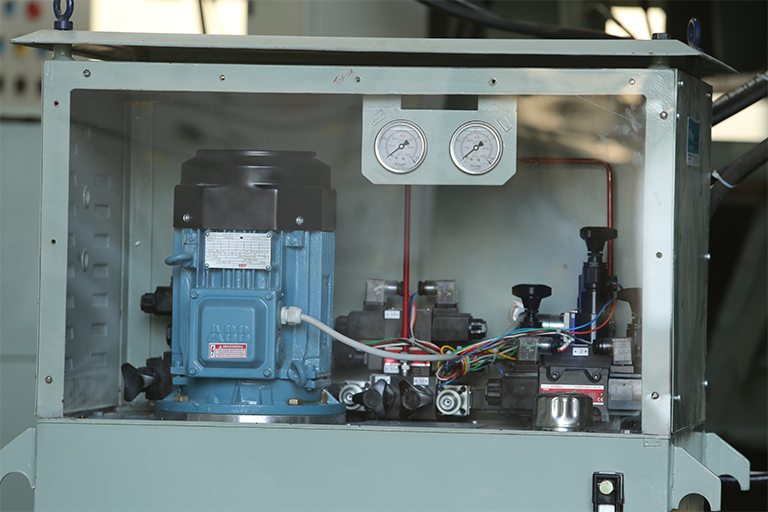
The hydraulic system plays an important role because it provides the force required to keep the plate pack tightly closed while feed pressure is applied.
Hydraulic filter presses can be designed in different sizes, capacities, plate configurations, materials, and levels of automation according to the process requirements of a particular industry.
How Does a Hydraulic Filter Press Work?
Understanding the operating principle makes it easier to recognize the advantages of hydraulic filtration.
The process generally starts by arranging the filter plates together inside the filter press frame. A hydraulic cylinder applies pressure to the moving plate, closing and compressing the complete plate pack.
Once the required closing pressure has been achieved, slurry is pumped into the filter press.
As the slurry enters the filter chambers, liquid passes through the filter cloth while suspended solids remain inside. These solids continue accumulating until a filter cake is formed.
Once the filtration cycle is completed, the slurry feed is stopped. The hydraulic system releases the closing pressure, allowing the plates to be opened so the filter cakes can be discharged.
The press can then be prepared for the next filtration cycle.
This relatively straightforward operating principle makes hydraulic filter presses suitable for a broad range of industrial filtration requirements.
Major Benefits of a Hydraulic Filter Press
1. Powerful and Consistent Plate Closing
One of the most important advantages of a hydraulic filter press is its ability to generate strong and consistent closing force.
During filtration, slurry can be pumped into the chambers at considerable pressure. Therefore, the plates need to remain firmly compressed throughout the filtration process.
A hydraulic closing mechanism helps maintain the required pressure on the plate pack. This can improve operational stability and help reduce the possibility of unwanted plate movement during normal filtration.
Compared with systems that depend heavily on manual tightening, hydraulic operation can provide more controlled and repeatable plate closing.
2. Efficient Solid-Liquid Separation
The primary purpose of a filter press is to separate solids from liquids effectively.
A properly selected hydraulic filter press can achieve efficient separation by forcing liquid through the filter cloth while retaining suspended solids inside the chambers.
The quality of separation depends on several factors, including:
- Slurry characteristics
- Particle size
- Feed pressure
- Filter cloth selection
- Plate design
- Filtration cycle time
- Solids concentration
- Operating conditions
When these parameters are properly matched, the filter press can produce relatively clear filtrate while concentrating the solids into manageable filter cakes.
For assistance in selecting a filtration system according to your process conditions, you can contact our filter press experts to discuss your application.
3. Better Filter Cake Formation
Efficient cake formation is another significant benefit of using a hydraulic filter press.
As filtration progresses, solids accumulate inside the filter chambers. Because the plates are securely held together, the filtration system can maintain stable operating conditions while the cake develops.
The resulting cake can often contain significantly less liquid than the original slurry.
Reducing the moisture contained in sludge or process solids can provide several operational advantages. A more concentrated cake may be easier to collect, transport, store, reuse, or dispose of.
For industries generating large quantities of sludge, improved dewatering can have a meaningful impact on overall waste-management efficiency.
4. Reduced Sludge Volume
Industrial sludge frequently contains a high percentage of water. Transporting or disposing of this water together with the solids can unnecessarily increase waste volume.
A hydraulic filter press removes a significant portion of the liquid from sludge and converts the remaining solids into filter cake.
This reduction in sludge volume can potentially lower:
- Transportation requirements
- Storage requirements
- Disposal volume
- Waste-handling workload
- Overall sludge-management expenses
This is particularly beneficial for Effluent Treatment Plants (ETPs), wastewater treatment facilities, chemical plants, textile units, ceramic manufacturing facilities, and other industries that continuously generate sludge.
5. Reduced Manual Effort
Manual filter presses can require operators to physically tighten or loosen the plate-closing mechanism. For larger filtration equipment, this process can become time-consuming and labor-intensive.
A hydraulic filter press simplifies plate closing and opening by using hydraulic power.
Depending on the machine design and level of automation, operators can control the closing mechanism more conveniently without relying entirely on manual force.
Reducing repetitive manual operations can improve productivity and allow workers to concentrate on monitoring filtration performance, cake discharge, cleaning, and other important process activities.
6. Reliable Operation for Industrial Applications
Industrial filtration equipment is often expected to operate repeatedly under demanding conditions.
Hydraulic filter presses are widely used because their basic operating principle is robust and suitable for many industrial processes.
With appropriate design, installation, operation, and preventive maintenance, the equipment can provide dependable filtration over a long service life.
Important components such as the hydraulic cylinder, power pack, filter plates, filter cloth, feed pump, frame, and control system should be regularly inspected to maintain reliable operation.
If your plant requires a customized filtration solution, get in touch with Panama Engineering to discuss your sludge characteristics, required capacity, and operating conditions.
7. Suitable for a Wide Range of Industries
Another major benefit of hydraulic filter presses is their versatility.
They can be used for solid-liquid separation across numerous industrial sectors, including:
- Wastewater treatment
- Effluent Treatment Plants
- Chemical processing
- Textile processing
- Ceramic manufacturing
- Marble processing
- Mining and minerals
- Pigments and dyes
- Paper manufacturing
- Sugar processing
- Steel processing
- Starch production
- Pharmaceutical processing
- Food processing and other suitable applications
Panama Engineering identifies industries including paper, sugar, ceramics, marble processing, textiles, wastewater, starch, chemicals, pigments, dyes, and steel among the sectors served by its filtration equipment.
Because every slurry behaves differently, however, filter press selection should always be based on the actual characteristics of the material being processed.
8. Flexibility in Filter Press Design
Hydraulic filter presses are not limited to one standard configuration.
The equipment can be engineered according to factors such as:
- Required filtration capacity
- Slurry characteristics
- Cake thickness
- Operating pressure
- Plate dimensions
- Plate material
- Filter cloth material
- Available installation space
- Required automation level
- Filtrate quality requirements
Filter plates may be manufactured from different materials depending on chemical compatibility, pressure requirements, temperature, and the nature of the process.
This flexibility allows businesses to select filtration equipment that matches their production requirements instead of adapting their complete process around a generic machine.
9. Potential for Lower Operating Costs
The purchase price of filtration equipment is only one part of its total cost.
Businesses also need to consider labor, energy consumption, maintenance, sludge transportation, waste disposal, downtime, filter cloth replacement, and production efficiency.
A correctly selected hydraulic filter press may help control overall operating expenses by improving dewatering and reducing the volume of wet sludge that must be handled.
For example, if a facility can remove more water from sludge before disposal, fewer resources may be required for transportation and storage.
The exact cost savings depend on the application, so businesses should evaluate lifecycle costs rather than focusing only on the initial equipment price.
10. Helps Improve Wastewater Management
Industrial wastewater can contain suspended solids, chemicals, pigments, processing residues, and other contaminants.
After suitable treatment processes, sludge needs to be separated and dewatered. Filter presses are commonly incorporated into wastewater and effluent-treatment systems for this purpose.
A hydraulic filter press can convert liquid-rich sludge into a more manageable filter cake while separating filtrate from the solids.
This makes it particularly useful as part of an Effluent Treatment Plant (ETP) or industrial wastewater-treatment process.
However, the filter press is generally one component of a larger treatment system. Other physical, chemical, or biological treatment stages may also be required depending on wastewater characteristics and applicable regulations.
11. Consistent Filtration Cycles
Consistency is important in industrial production.
Because hydraulic pressure can provide repeatable plate closing, operators can establish more standardized filtration cycles when other process conditions are also controlled.
Consistent operation can help businesses monitor variables such as:
- Filling time
- Filtration pressure
- Cake formation time
- Cake discharge
- Filtrate quality
- Total cycle duration
Monitoring these parameters makes it easier to identify changes in slurry behavior or filtration performance and take corrective action when required.
12. Easier Integration with Automation
Modern industrial facilities increasingly use automated systems to improve productivity and reduce repetitive manual tasks.
A hydraulic filter press can be integrated with various automation features depending on its design. These may include automated hydraulic closing, feed-pump controls, pressure monitoring, plate shifting, cake discharge assistance, cloth washing, drip trays, and control panels.
The required automation level depends on production capacity, labor availability, budget, cycle frequency, and process requirements.
For high-volume plants operating multiple filtration cycles per day, automation can provide particularly significant operational benefits.
13. Durable Construction
Industrial filtration equipment must withstand repeated pressure cycles and challenging operating environments.
Hydraulic filter presses are generally designed with robust frames and components suitable for industrial service.
The actual service life of a machine depends on construction quality, materials, operating conditions, preventive maintenance, chemical exposure, and whether the press is operated within its specified limits.
Regular maintenance of hydraulic components, plates, cloths, pumps, seals, and structural elements can help maintain performance and extend equipment life.
14. Improved Workplace Efficiency
A filtration system that is easier to operate can contribute to better overall plant efficiency.
Hydraulic plate closing reduces the physical effort required for one of the key stages of filter press operation. When combined with appropriate controls and automation, it can also reduce operator intervention throughout the filtration cycle.
This can make it easier for industrial plants to manage repeated filtration cycles and maintain more predictable production schedules.
Hydraulic Filter Press vs. Manual Filter Press
The fundamental filtration principle of hydraulic and manual filter presses is similar. The major difference is the method used to close and secure the plate pack.
A manual filter press typically relies on a mechanical screw or manually operated mechanism. This can be practical for smaller systems, intermittent operation, or applications where simplicity is a priority.
A hydraulic filter press uses hydraulic force for plate closing. This makes it particularly attractive for larger systems, frequent filtration cycles, and applications where consistent closing pressure and easier operation are important.
The best choice depends on filtration capacity, process requirements, available labor, budget, and desired level of automation.
How to Choose the Right Hydraulic Filter Press
Selecting the correct filter press requires more than simply choosing the largest machine available.
Before purchasing equipment, consider:
- Type and composition of slurry
- Solids concentration
- Particle characteristics
- Required processing capacity
- Desired cake dryness
- Required filtrate quality
- Operating pressure
- Chemical compatibility
- Filtration cycle frequency
- Available plant space
- Plate and cloth requirements
- Maintenance requirements
- Desired automation level
A detailed analysis of the slurry and operating conditions can help determine the most suitable press configuration.
If you are unsure which configuration is appropriate, request a hydraulic filter press consultation and provide details about your application and required filtration capacity.
Why Hydraulic Filter Presses Are Important for Modern Industries
Modern industries face increasing pressure to improve resource efficiency, manage wastewater effectively, reduce waste volumes, and optimize production costs.
Solid-liquid separation directly influences many of these objectives.
A hydraulic filter press provides a practical method for removing liquid from industrial sludge and process slurries. By producing concentrated filter cake and separated filtrate, it can simplify downstream handling and improve overall process efficiency.
Its combination of strong hydraulic closing pressure, flexibility, durability, and potential for automation makes it suitable for both established industrial plants and new filtration installations.
Maintenance Tips for a Hydraulic Filter Press
Even high-quality filtration equipment requires regular maintenance.
Operators should routinely inspect the hydraulic system for leaks and check the hydraulic oil according to the manufacturer's maintenance recommendations.
Filter cloths should also be inspected and cleaned regularly. Damaged, clogged, or incorrectly installed filter cloth can reduce filtration efficiency and affect filtrate quality.
Filter plates should be examined for damage, deformation, scaling, or excessive buildup. Feed pumps, valves, piping, pressure instruments, and control components should also be maintained according to the operating schedule.
Preventive maintenance can reduce unexpected downtime and help maintain consistent filtration performance.
Frequently Asked Questions About Hydraulic Filter Presses
What is the main benefit of a hydraulic filter press?
The main benefit is the ability to apply strong and consistent hydraulic closing force to the filter plate pack while providing efficient solid-liquid separation. This makes the equipment suitable for demanding industrial filtration and sludge-dewatering applications.
Where is a hydraulic filter press used?
Hydraulic filter presses can be used in wastewater treatment, ETP plants, chemicals, textiles, ceramics, marble processing, mining, pigments, dyes, paper, sugar, steel, and many other industrial processes.
Does a hydraulic filter press reduce sludge volume?
Yes. A filter press removes liquid from sludge and concentrates solids into filter cake. This can significantly reduce the volume of material that needs to be handled, transported, stored, or disposed of.
Is a hydraulic filter press better than a manual filter press?
Neither option is universally better. Hydraulic filter presses are generally more suitable when strong and repeatable closing pressure, frequent cycles, larger capacities, or easier operation are required. Manual presses may remain practical for smaller or less frequent filtration applications.
Can a hydraulic filter press be automated?
Yes. Depending on the equipment configuration, hydraulic filter presses can incorporate automated controls for various stages of operation, such as hydraulic closing, plate shifting, cake discharge assistance, cloth washing, and other process functions.
How do I choose the correct hydraulic filter press capacity?
Capacity depends on slurry volume, solids concentration, required cake volume, cycle duration, operating hours, and filtration characteristics. A proper process evaluation is recommended before selecting the press size.
Conclusion
A hydraulic filter press offers numerous advantages for industries requiring dependable and efficient solid-liquid separation. Powerful plate closing, effective sludge dewatering, reduced waste volume, improved cake formation, lower manual effort, design flexibility, and automation potential make it an important piece of equipment for many industrial processes.
Its applications extend from wastewater and effluent treatment to chemicals, textiles, ceramics, marble, mining, paper, sugar, pigments, dyes, steel, and other process industries.
However, achieving the best filtration results depends on choosing the right filter press configuration for the specific slurry and operating conditions. Plate size, filter cloth, feed pressure, cake thickness, hydraulic system, capacity, and automation level should all be carefully considered.
Panama Engineering states that it has more than five decades of experience in manufacturing and supplying filter presses and offers manual, semi-automatic, and fully automated filtration solutions for different industrial requirements.
If you are planning to install a new hydraulic filter press, upgrade an existing filtration system, or need help selecting equipment for your application, contact Panama Engineering to discuss your filtration requirements.
Explore Hydraulic Filter Press Systems
Review the dedicated hydraulic filter press page for equipment information, compare available filter press plates, or request a technical discussion.
Explore Filter Press Solutions
Continue your research with our filter press machines, filter press plates and technical enquiry pages.
Send Your Requirement